

Rooted in Beekeeping. Guided by Nature. Supported by Science.
Real Honey Deserves Real Testing.
Natural by Origin. Supported by Science.
Traditional Beekeeping Knowledge. Advanced Scientific Testing.
At Indigenous Honey, we believe genuine honey deserves more than promises.
That's why we combine traditional beekeeping knowledge with advanced scientific testing to evaluate the quality, authenticity, and safety-related characteristics of our honey.
These approaches help us investigate possible honey adulteration, evaluate natural composition, and screen for selected residues and contaminants.
Because when it comes to honey, we believe scientific evidence matters.
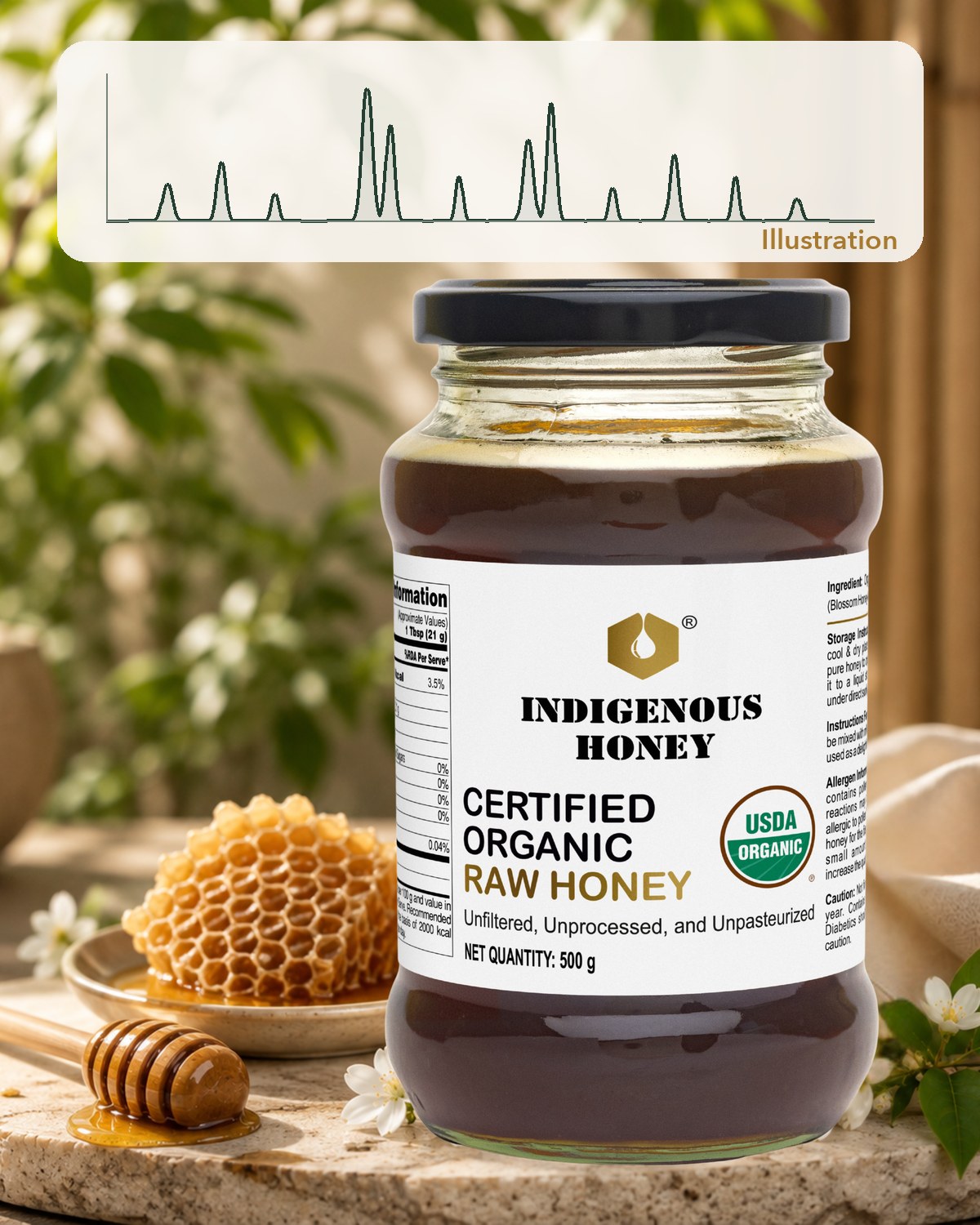
Advanced Honey Authenticity Testing
Going Beyond Conventional Honey Testing
Honey is a naturally complex food composed of sugars, organic acids, enzymes, and numerous other naturally occurring compounds. Its composition varies according to floral sources, geographical conditions, and other environmental factors.
Unfortunately, honey can also be adulterated with different types of sugar syrups. Some forms of adulteration may be difficult to identify through basic quality tests alone. That's why modern honey-authenticity analysis increasingly uses multiple advanced analytical approaches.
At Indigenous Honey, our testing program incorporates both LC-HRMS and NMR Honey Profiling, alongside other applicable laboratory methods. These technologies investigate different aspects of honey chemistry, providing complementary information for authenticity assessment.
Why Multiple Testing Methods? No single laboratory technique can detect every possible form of honey adulteration. Different methods examine different chemical characteristics and markers. By combining appropriate analytical methods, laboratories can develop a more comprehensive understanding of the tested honey sample.
LC-HRMS — High-Resolution Honey Analysis
Detecting Chemical Markers Associated With Honey Adulteration
LC-HRMS stands for Liquid Chromatography–High-Resolution Mass Spectrometry. It is a sophisticated analytical technique used in food testing to separate, detect, and characterise chemical compounds with high mass accuracy.
In honey-authenticity testing, LC-HRMS can help laboratories investigate chemical markers associated with certain forms of sugar-syrup adulteration.
From November 2026, every batch of our Certified Organic Raw Honey, and of the spice-infused honeys made with it, will also be LC-HRMS tested.

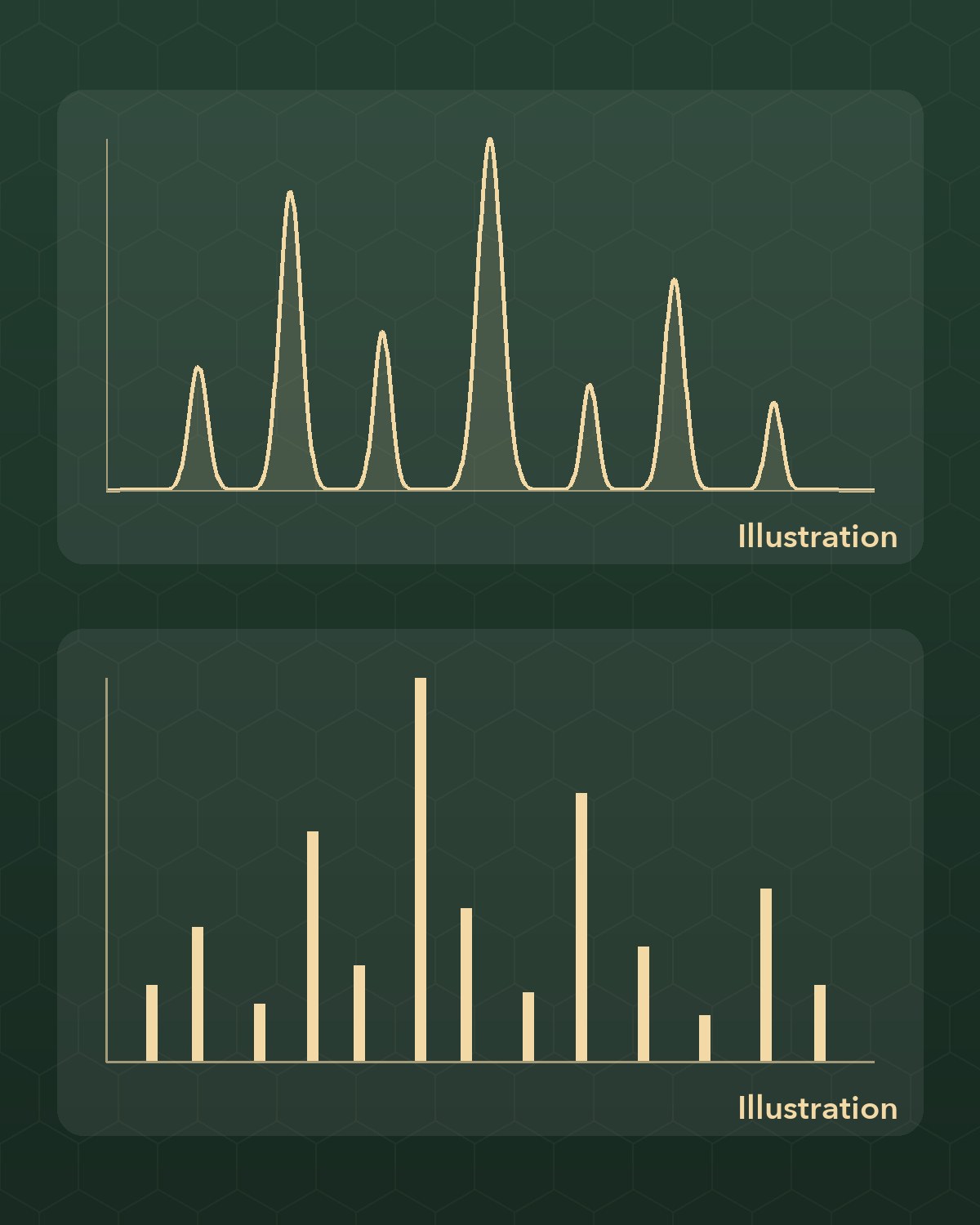
Liquid Chromatography (LC)
How Does LC-HRMS Work? LC-HRMS combines two powerful analytical technologies.
Liquid Chromatography separates different chemical compounds present in a honey sample.
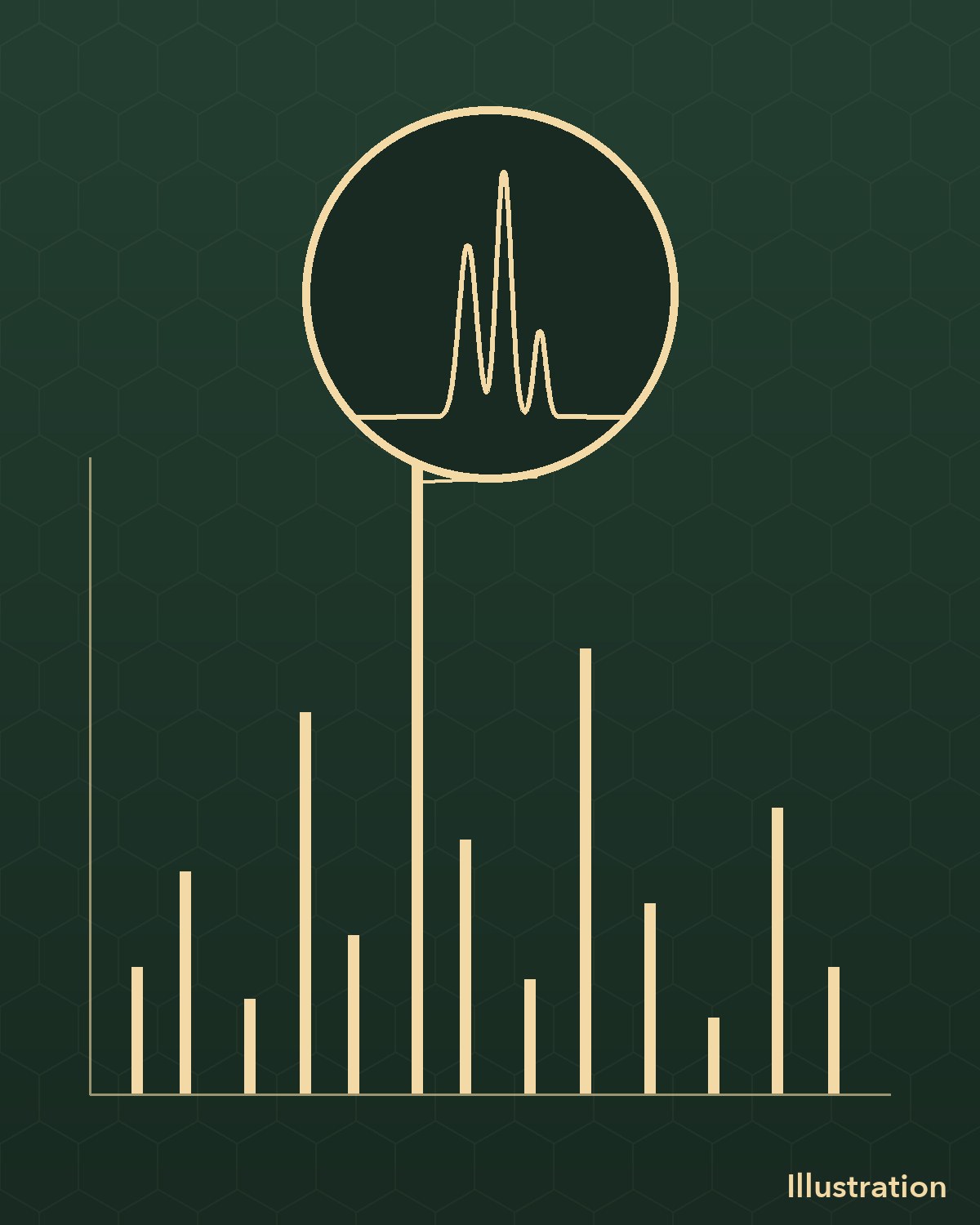
High-Resolution Mass Spectrometry (HRMS)
Measures the mass-to-charge ratios of ions with high accuracy, helping laboratories identify and characterise selected chemical compounds.
Together, these technologies allow scientists to examine specific chemical markers, including compounds that may be present at relatively low concentrations.
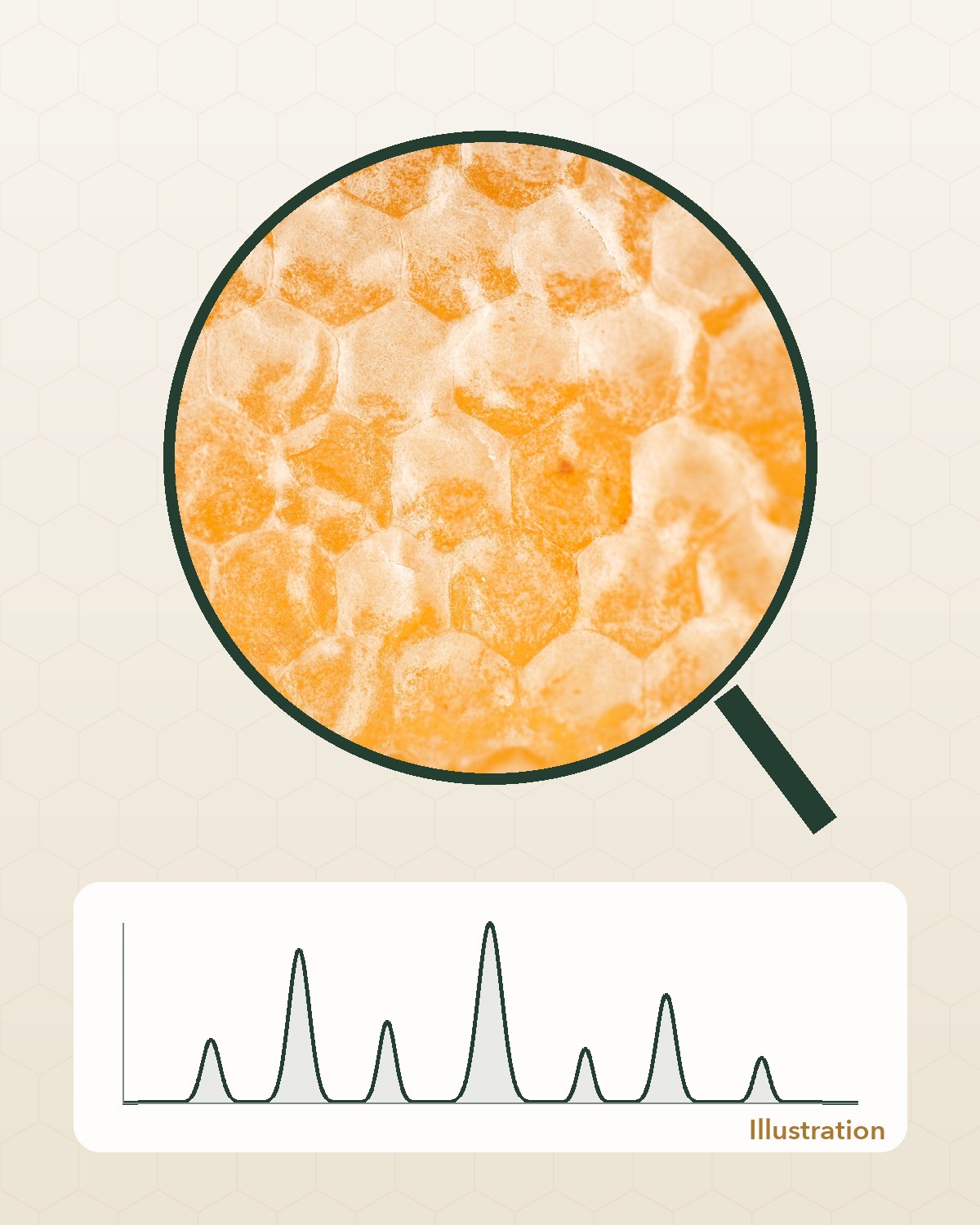
Why Is LC-HRMS Important?
Some forms of honey adulteration involve syrups that are difficult to distinguish from honey using basic compositional measurements. LC-HRMS offers a highly sensitive approach for examining selected chemical markers that may help identify such adulteration.
Scientists at the European Commission's Joint Research Centre have developed LC-HRMS methods for detecting specific honey-adulteration markers, including mannose and AFGP (source: Knowledge4Policy, European Commission).
For Indigenous Honey, LC-HRMS provides another advanced analytical approach within our honey-authenticity testing program.
LC-HRMS — High-Resolution Honey Analysis
Detecting Chemical Markers Associated With Honey Adulteration
LC-HRMS stands for Liquid Chromatography–High-Resolution Mass Spectrometry. It is a sophisticated analytical technique used in food testing to separate, detect, and characterise chemical compounds with high mass accuracy.
In honey-authenticity testing, LC-HRMS can help laboratories investigate chemical markers associated with certain forms of sugar-syrup adulteration.
From November 2026, every batch of our Certified Organic Raw Honey, and of the spice-infused honeys made with it, will also be LC-HRMS tested.
Liquid Chromatography (LC)
How Does LC-HRMS Work? LC-HRMS combines two powerful analytical technologies.
Liquid Chromatography separates different chemical compounds present in a honey sample.
High-Resolution Mass Spectrometry (HRMS)
Measures the mass-to-charge ratios of ions with high accuracy, helping laboratories identify and characterise selected chemical compounds.
Together, these technologies allow scientists to examine specific chemical markers, including compounds that may be present at relatively low concentrations.
Why Is LC-HRMS Important?
Some forms of honey adulteration involve syrups that are difficult to distinguish from honey using basic compositional measurements. LC-HRMS offers a highly sensitive approach for examining selected chemical markers that may help identify such adulteration.
Scientists at the European Commission's Joint Research Centre have developed LC-HRMS methods for detecting specific honey-adulteration markers, including mannose and AFGP (source: Knowledge4Policy, European Commission).
For Indigenous Honey, LC-HRMS provides another advanced analytical approach within our honey-authenticity testing program.
What Can LC-HRMS Help Detect?
Markers Associated With Sugar-Syrup Adulteration
Depending on the analytical method, LC-HRMS can help investigate markers associated with:
Rice Syrup Adulteration
Certain compounds, such as 2-acetylfuran-3-glucopyranoside (AFGP), can serve as indicators associated with rice-syrup addition.
Starch-Based Sugar Syrups
Selected compounds, including mannose and certain oligosaccharides, can help laboratories investigate the possible addition of starch-based syrups.
Other Sugar-Syrup Markers
Targeted or non-targeted LC-HRMS methods can examine additional chemical characteristics that may be associated with particular syrup sources.
Unusual Chemical Profiles
Advanced screening approaches can also investigate unexpected chemical signals that require further scientific evaluation.
The compounds assessed and conclusions supported depend on the specific laboratory method and report. Not every LC-HRMS analysis covers every marker described above.
NMR Honey Profiling — Germany
Understanding Honey Through Its Chemical Fingerprint
NMR Honey Profiling is an advanced scientific technique used to examine the chemical composition of honey. Rather than focusing on a single substance, NMR analyses a broader pattern of chemical signals.
The resulting chemical fingerprint can be compared with reference honey profiles to help laboratories assess authenticity and composition.
Every batch of our Certified Organic Raw Honey, and of our spice-infused honeys, made with our Certified Organic Raw Honey, is NMR tested.
Request NMR ReportsNuclear Magnetic Resonance
Bruker Honey-Profiling
Intertek Food Services, Germany
Certified Organic Raw Honey and the spice-infused honeys made with it
What Can NMR Help Evaluate?
A Chemical Fingerprint. A Scientific Approach to Authenticity.
Depending on the testing methodology and available reference data:
Added sugars
Indications of certain added sugars
Sugar composition
Sugar composition
Reference profiles
Consistency with reference honey profiles
Botanical characteristics
Declared botanical characteristics
Geographical origin
Geographical-origin consistency
Quality and processing
Selected quality and processing-related indicators
Why Do We Use NMR?
Honey contains numerous naturally occurring compounds. Their combined chemical characteristics can provide valuable information about honey authenticity.
NMR allows laboratories to examine this broader chemical profile rather than relying exclusively on individual compositional measurements.
For our Certified Organic Raw Honey and the spice-infused honeys made with it, NMR Honey Profiling adds another layer to our authenticity-testing approach.
LC-HRMS and NMR — Two Advanced Methods, Different Strengths
Why We Use Complementary Analytical Technologies
LC-HRMS and NMR both contribute to modern honey-authenticity analysis. However, they examine honey using different scientific principles.
| Comparison | LC-HRMS | NMR Honey Profiling |
|---|---|---|
| Technique | High-resolution mass spectrometry | Nuclear magnetic resonance spectroscopy |
| What it examines | Selected chemical compounds and analytical profiles | Broader chemical signals and composition |
| Sensitivity and scope | Can provide high sensitivity for certain low-level markers | Provides a comprehensive chemical fingerprint |
| Useful for | Investigating particular syrup-related markers | Assessing composition and consistency with reference profiles |
| Approach | Can use targeted and non-targeted approaches | Can combine targeted analysis with broader profiling |
Which Is Better?
Neither technique is universally better. LC-HRMS can be particularly valuable when highly sensitive analysis of selected chemical markers is required. NMR is valuable for analysing broader chemical patterns and comparing honey with reference profiles.
When used appropriately, the two methods provide complementary scientific information.
Our objective is not to rely on one technology alone, but to use appropriate methods to strengthen our understanding of honey authenticity.Alongside advanced analytical technologies, our honey undergoes laboratory testing in India for important quality, authenticity, and safety-related parameters.
Testing laboratory: NDDB CALF, Anand, Gujarat. The applicable laboratory panels include selected parameters across five categories.
Quality & Safety Testing — India
Beyond Authenticity: Understanding Honey Quality
Honey Quality
Testing may include:
- Total reducing sugars
- Sucrose
- Fructose-to-glucose ratio
- Free acidity
- Hydroxymethylfurfural (HMF)
- Diastase activity
- Water-insoluble matter
- Pollen and plant elements
These parameters provide information about honey composition and quality.
Honey Authenticity
Testing may include:
- C4 sugar analysis
- Rice-syrup-related markers
- Foreign oligosaccharides
- Proline
- Carbon-isotope parameters
These measurements can help investigate specific authenticity concerns.
Antibiotic Residues
Antibiotic & Antimicrobial Residues
Our testing program includes screening for selected substances, such as:
Chloramphenicol, nitrofurans and their metabolites, sulphonamides, streptomycin, tetracycline-group antibiotics, ampicillin, enrofloxacin, ciprofloxacin, erythromycin, and tylosin.
Heavy Metals
Testing includes selected metals such as:
Lead, arsenic, cadmium, mercury, and tin.
Pesticide Residues
Our laboratory-testing program includes screening for selected pesticide compounds, which may include organochlorine, organophosphate, and pyrethroid-related residues.
Pesticide residue testing applies to our Certified Organic Raw Honey and our spice-infused honeys, made with our Certified Organic Raw Honey.
The exact substances tested depend on the applicable laboratory panel.
Testing may include:
- Total reducing sugars
- Sucrose
- Fructose-to-glucose ratio
- Free acidity
- Hydroxymethylfurfural (HMF)
- Diastase activity
- Water-insoluble matter
- Pollen and plant elements
These parameters provide information about honey composition and quality.
Testing may include:
- C4 sugar analysis
- Rice-syrup-related markers
- Foreign oligosaccharides
- Proline
- Carbon-isotope parameters
These measurements can help investigate specific authenticity concerns.
Antibiotic & Antimicrobial Residues
Our testing program includes screening for selected substances, such as:
Chloramphenicol, nitrofurans and their metabolites, sulphonamides, streptomycin, tetracycline-group antibiotics, ampicillin, enrofloxacin, ciprofloxacin, erythromycin, and tylosin.
Testing includes selected metals such as:
Lead, arsenic, cadmium, mercury, and tin.
Our laboratory-testing program includes screening for selected pesticide compounds, which may include organochlorine, organophosphate, and pyrethroid-related residues.
Pesticide residue testing applies to our Certified Organic Raw Honey and our spice-infused honeys, made with our Certified Organic Raw Honey.
The exact substances tested depend on the applicable laboratory panel.
LOQ
Limit of Quantification
What Do Our Laboratory Results Mean? Scientific Testing Deserves Accurate Communication.
Laboratory reports contain important measurements and technical terms. One commonly reported term is Below LOQ.
When a laboratory reports a substance as below LOQ, it means that the substance was not quantified at or above the method's defined quantification limit. It does not necessarily mean that the substance is completely absent.
We believe customers deserve accurate explanations of laboratory findings. Our approach is straightforward:
Test It. Measure It. Report It Accurately.
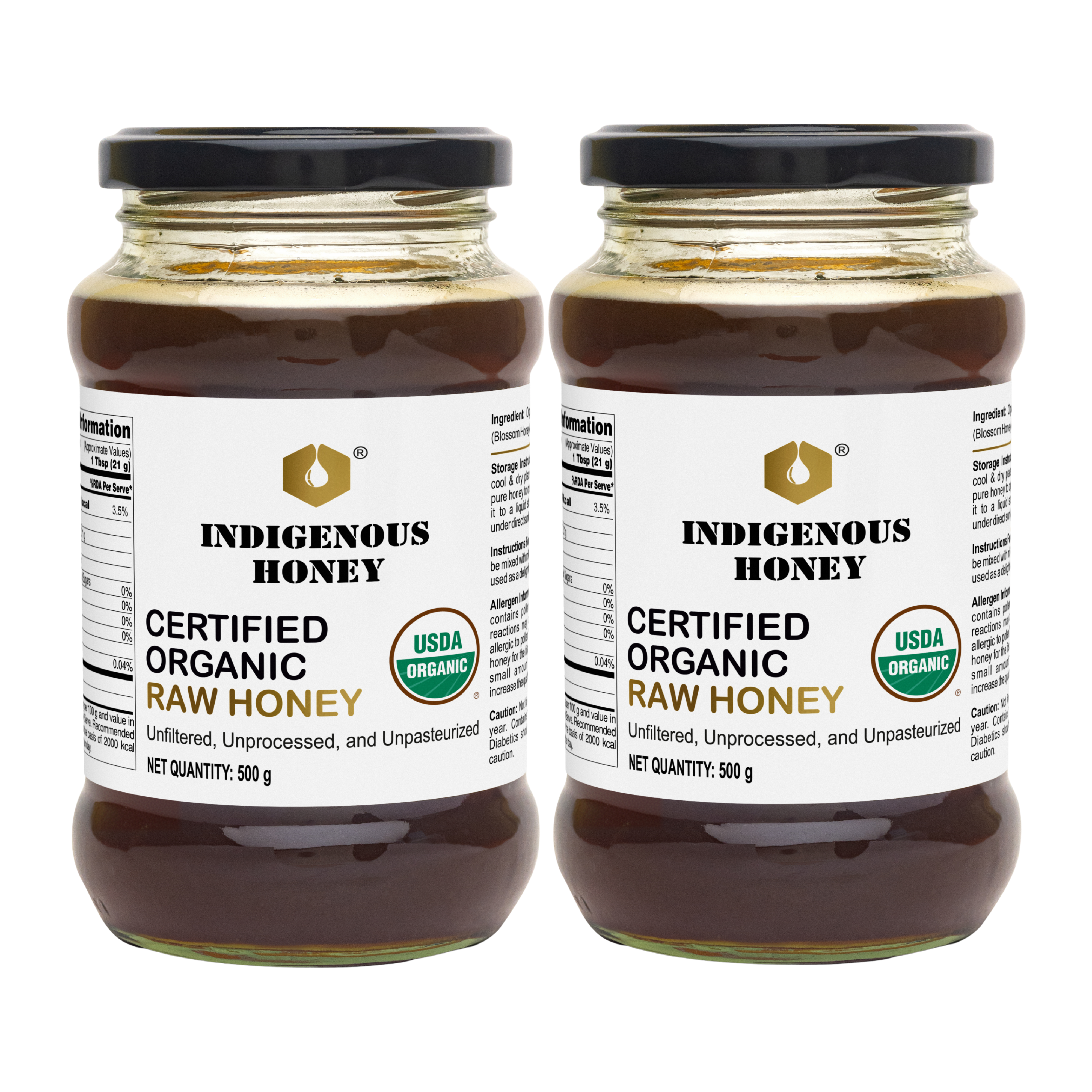
Our Certified Organic Raw Honey
Multiple Layers of Quality and Authenticity Assessment
Our Certified Organic Raw Honey testing program, also used for our spice-infused honeys, made with our Certified Organic Raw Honey, brings together applicable analytical methods for evaluating honey quality and authenticity. These include:
LC-HRMS Analysis
Advanced analysis of selected chemical markers relevant to authenticity assessment.
From November 2026, every batch of our Certified Organic Raw Honey, and of the spice-infused honeys made with it, will also be LC-HRMS tested.
NMR Honey Profiling — Germany
Chemical-fingerprint analysis using the Bruker Honey-Profiling methodology.
Honey Quality Testing — India
Analysis of composition and important quality characteristics.
Authenticity Screening
Selected testing methods relevant to sugar-syrup adulteration.
Antibiotic & Heavy-Metal Testing
Screening for specified residues and contaminants.
Pesticide Residue Screening
Analysis of selected pesticide compounds.
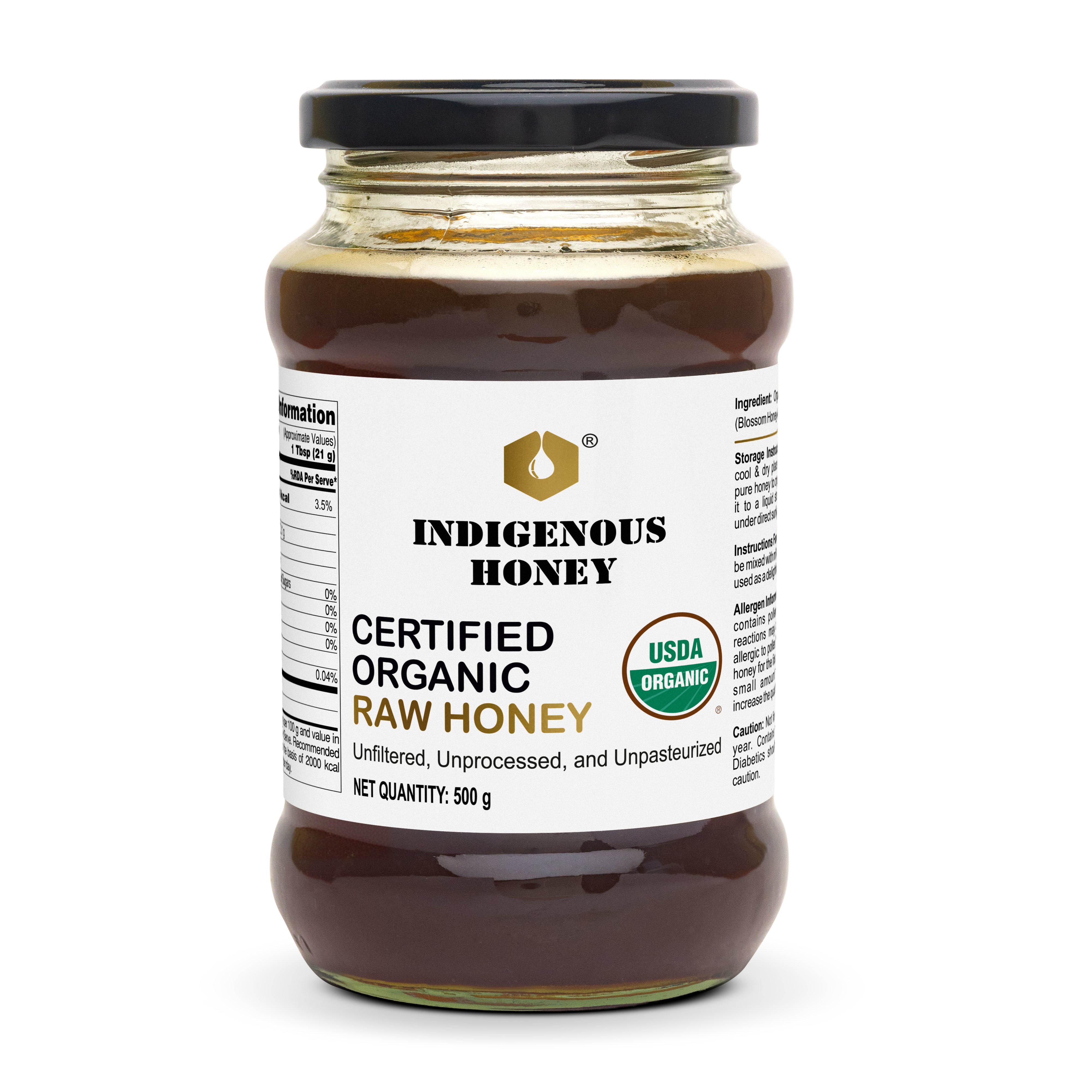
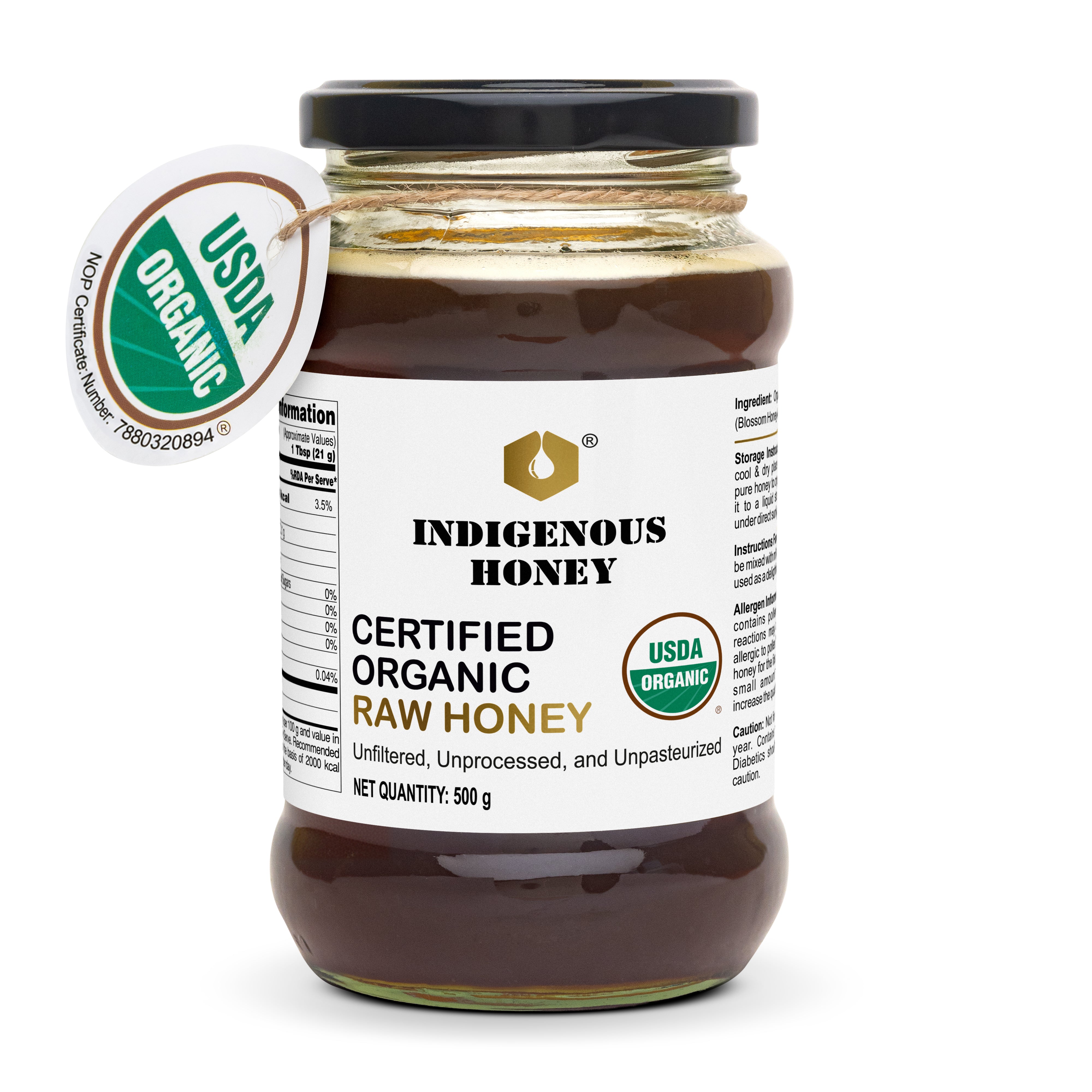
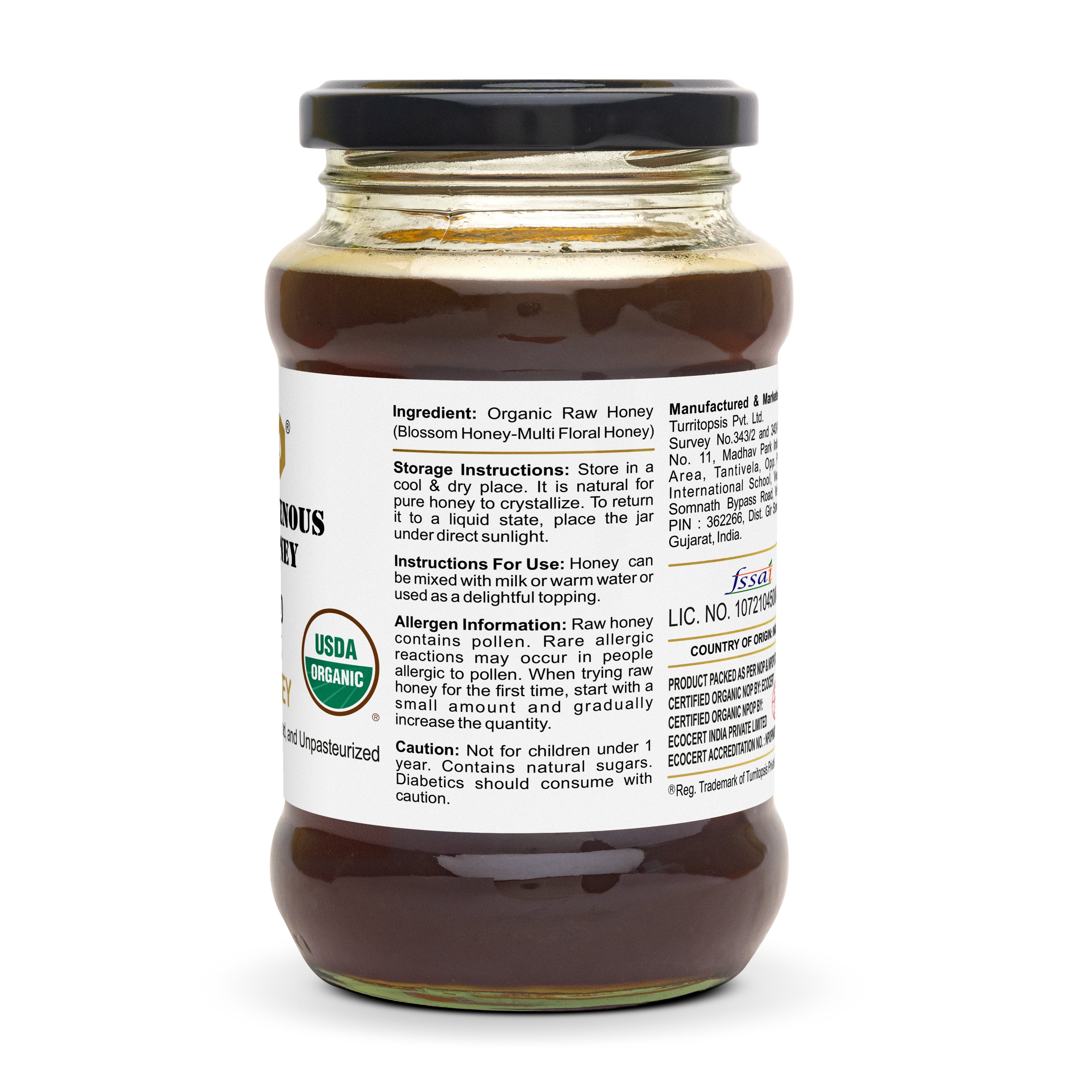
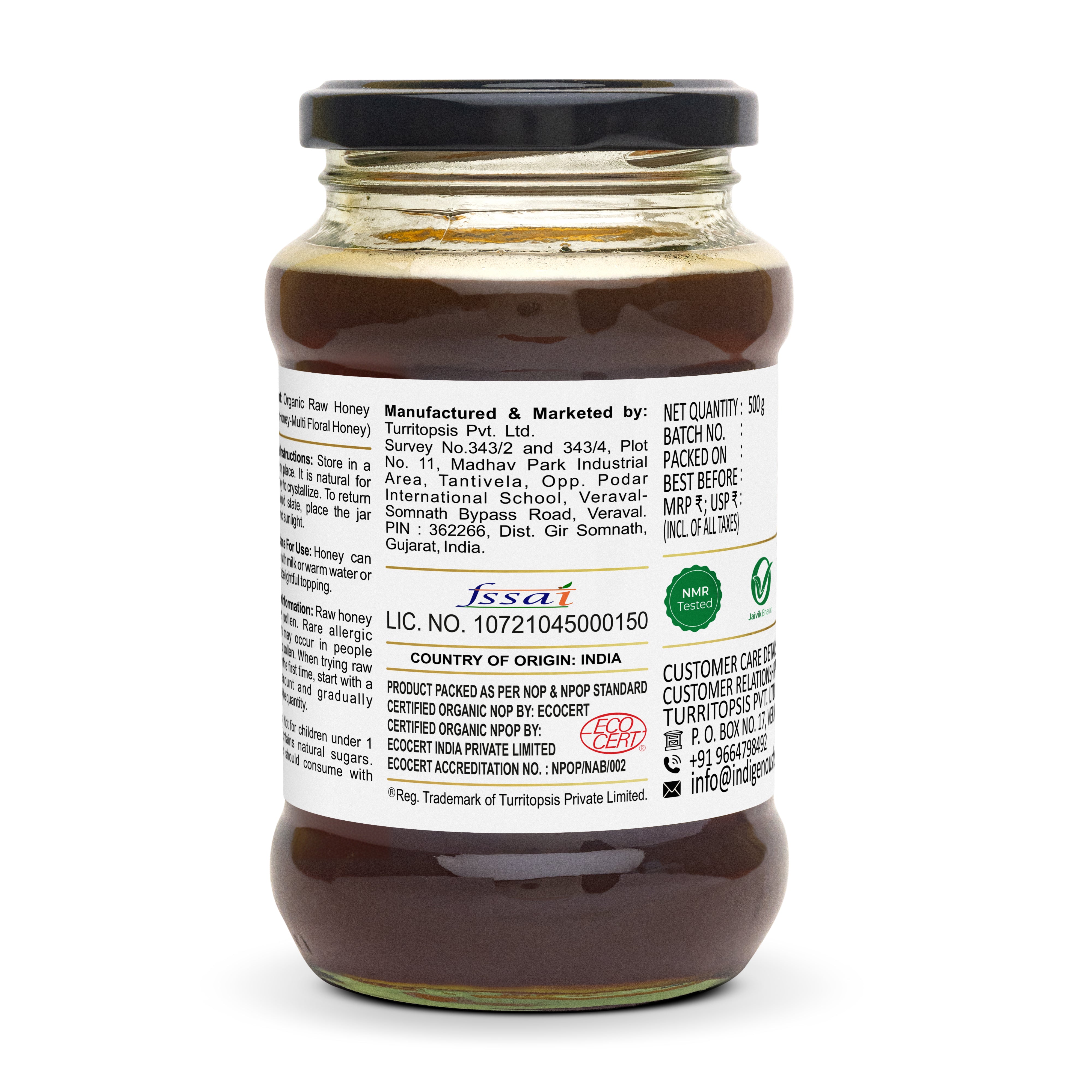
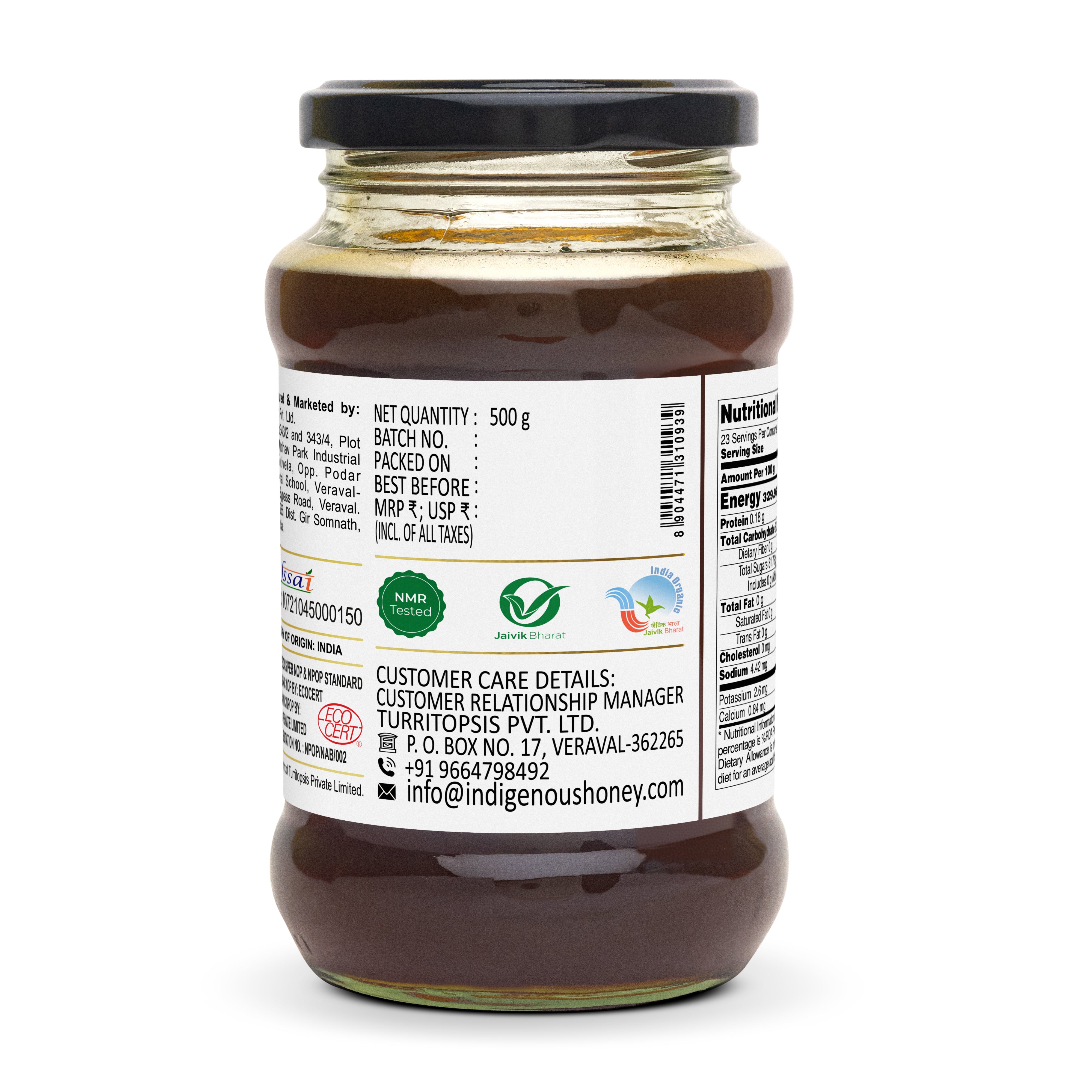
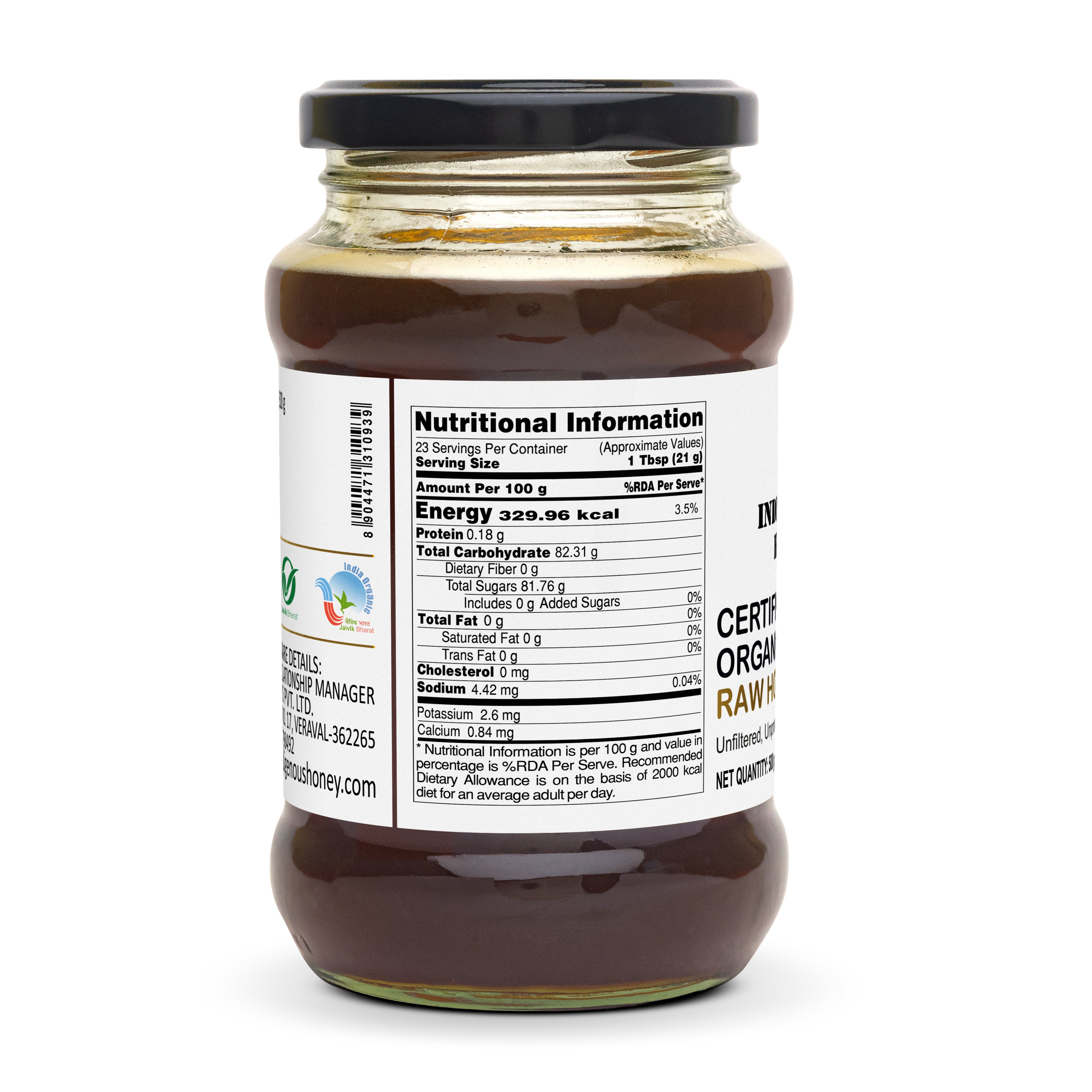
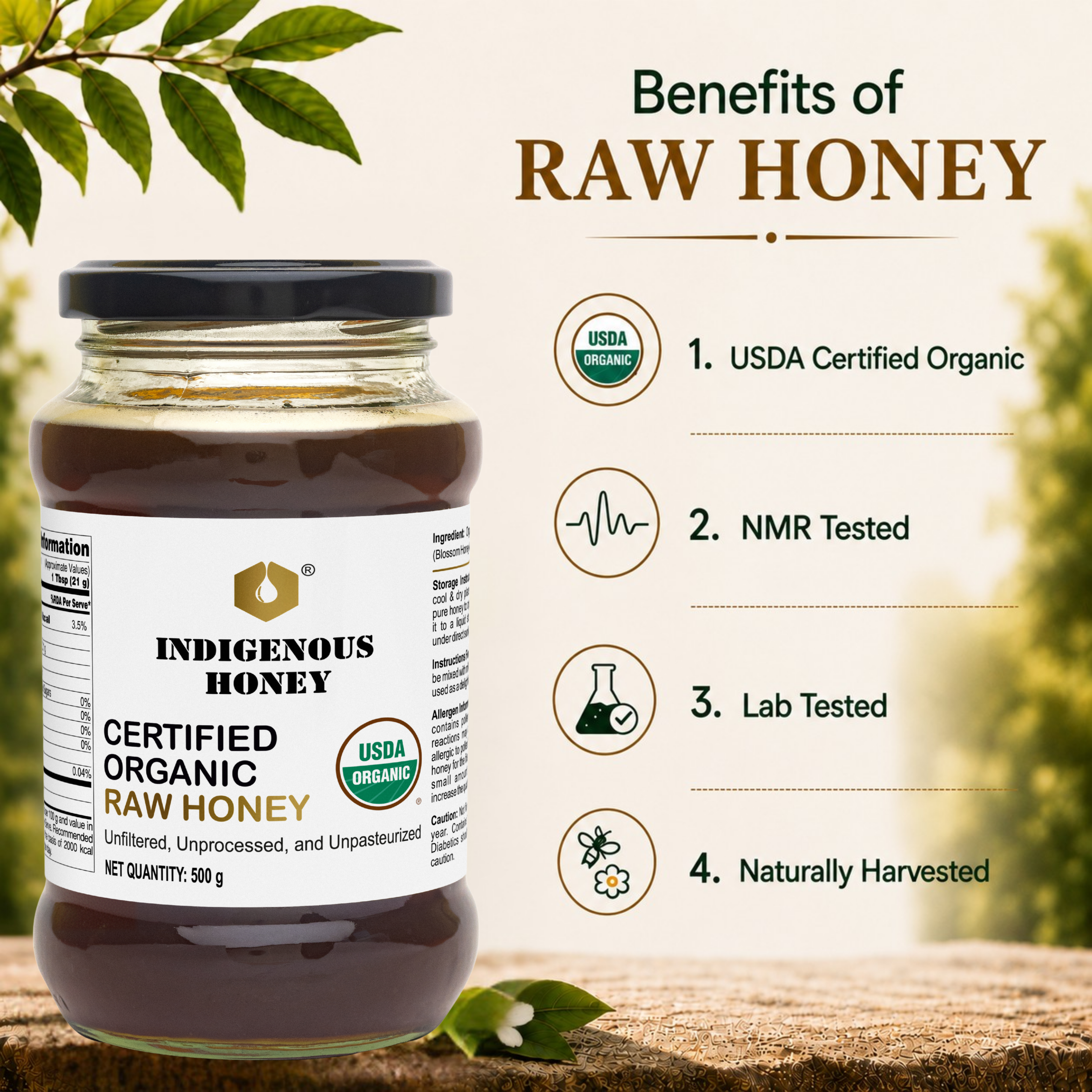
Every batch NMR tested by Intertek Food Services, Germany. From November 2026, every batch of our Certified Organic Raw Honey, and of the spice-infused honeys made with it, will also be LC-HRMS tested.
Organic Certification Is Different From Laboratory Testing
Request Laboratory ReportsOrganic certification verifies compliance with applicable organic standards and certification requirements.
Laboratory authenticity testing examines particular characteristics of a honey sample.
Both have distinct roles within a comprehensive quality-assurance program.
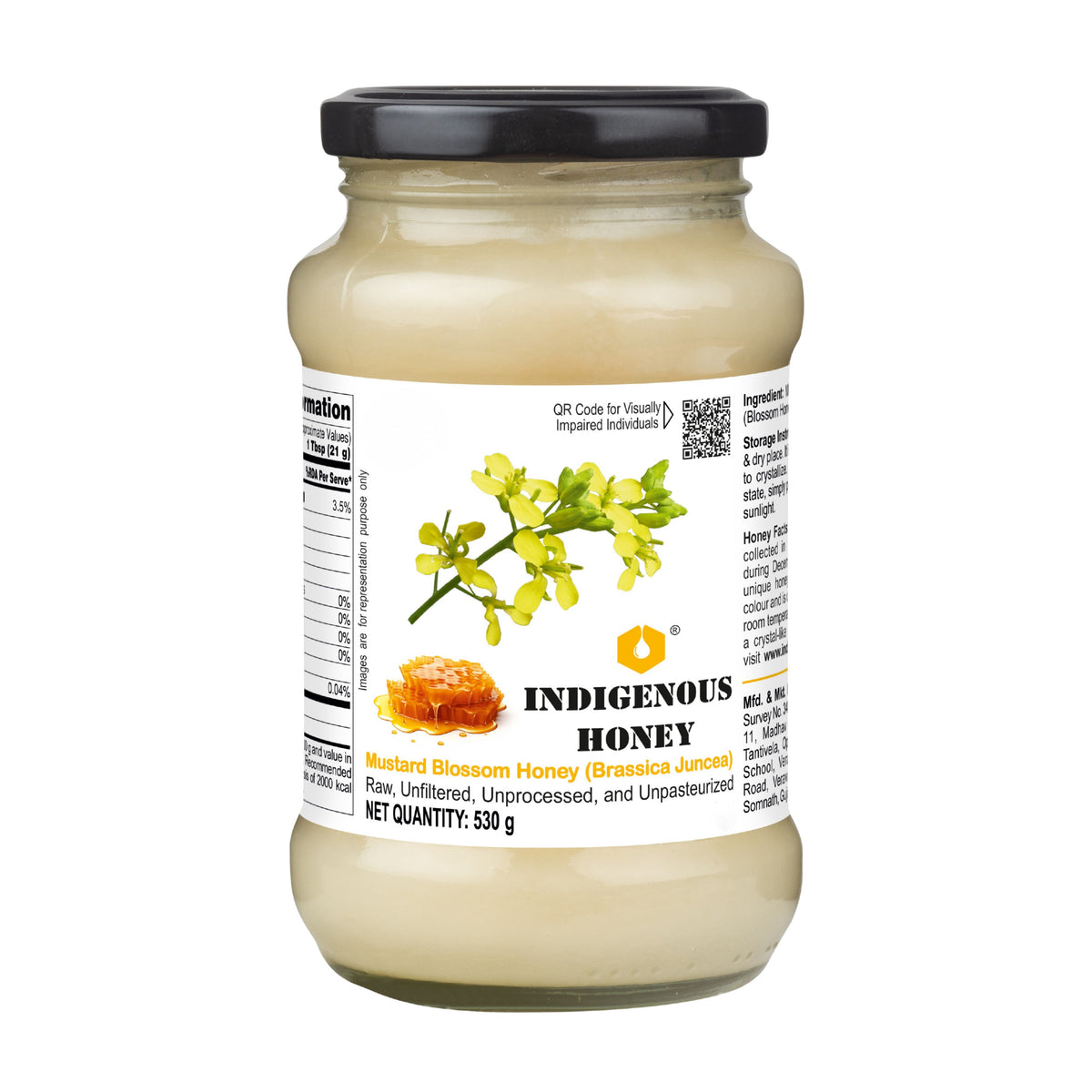
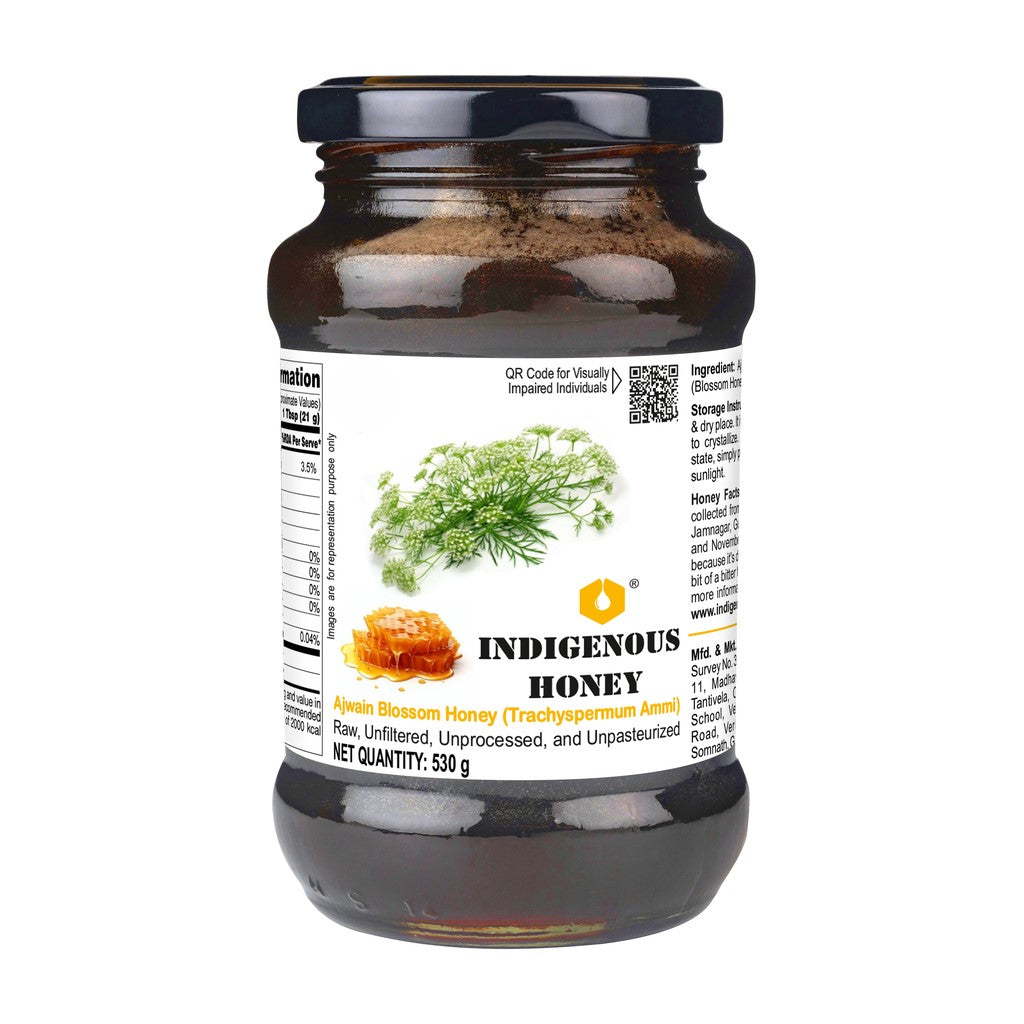
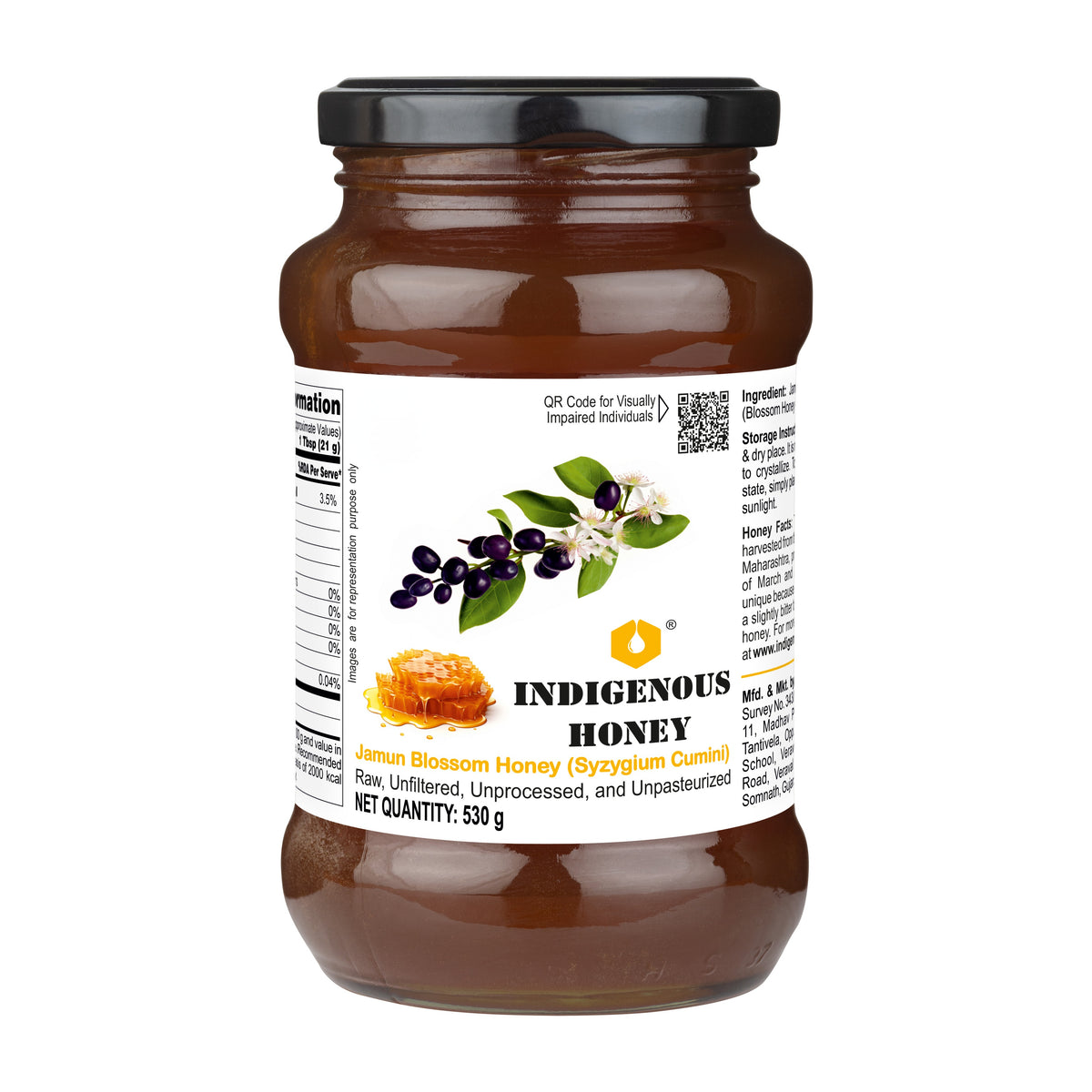
Our Natural Honey Variants
Quality Testing Across Our Honey Collection
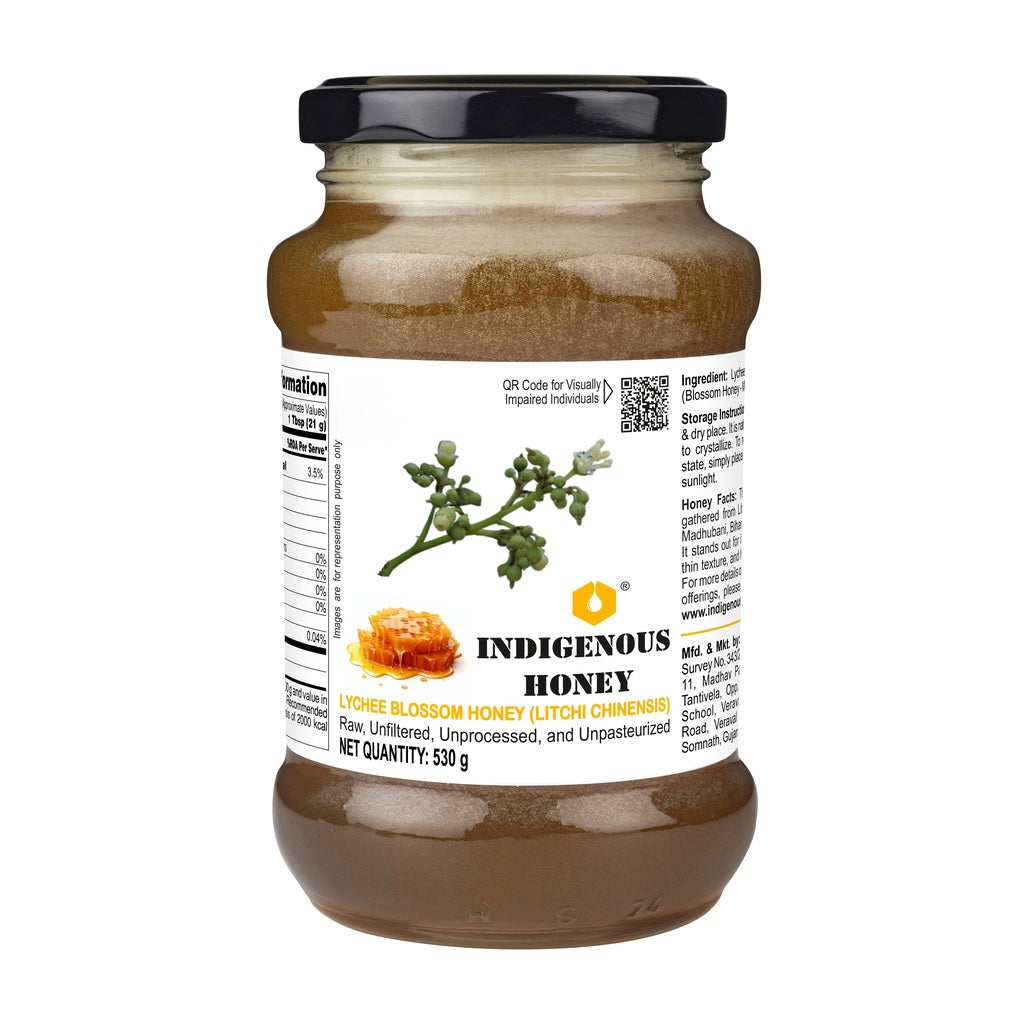
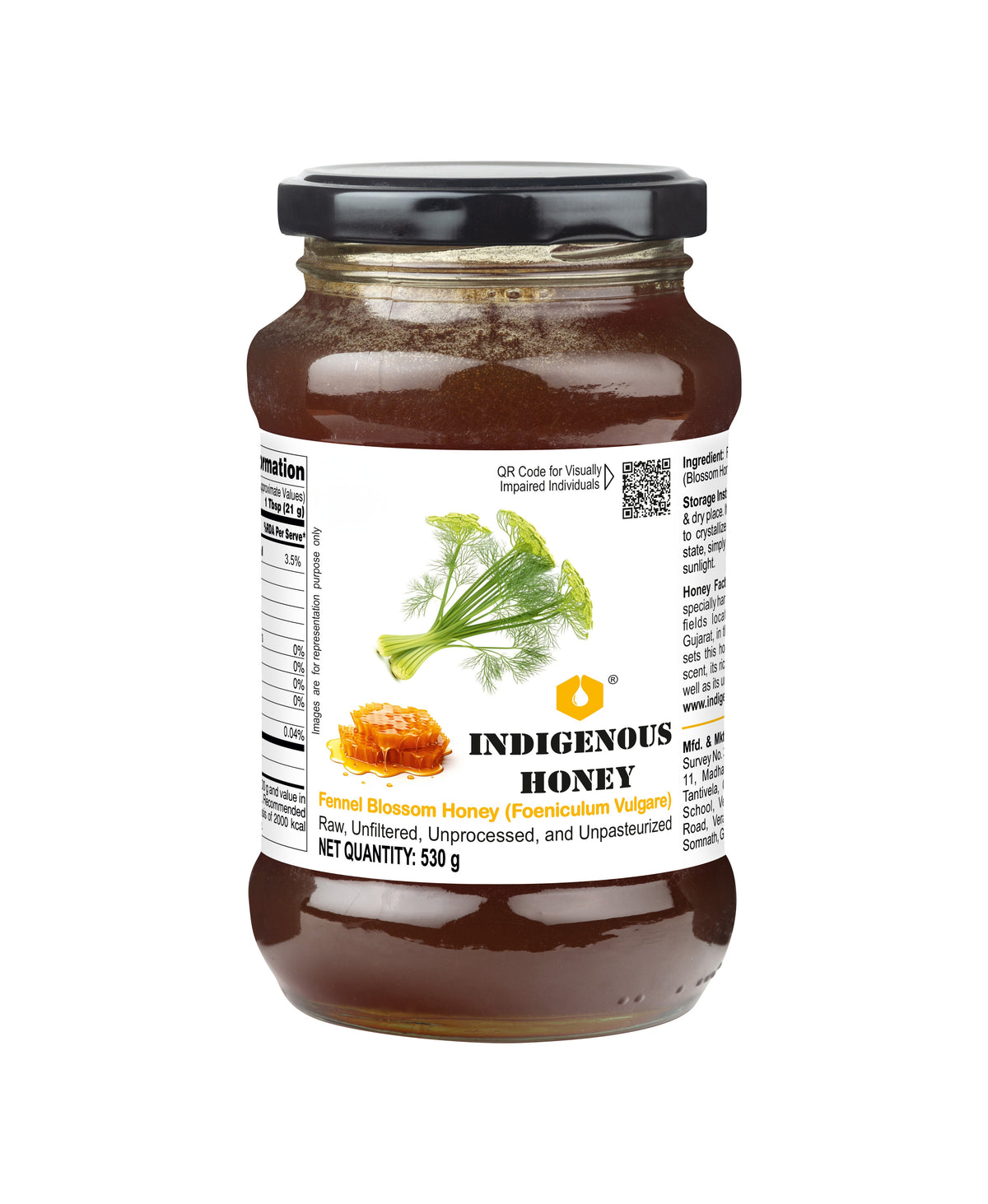
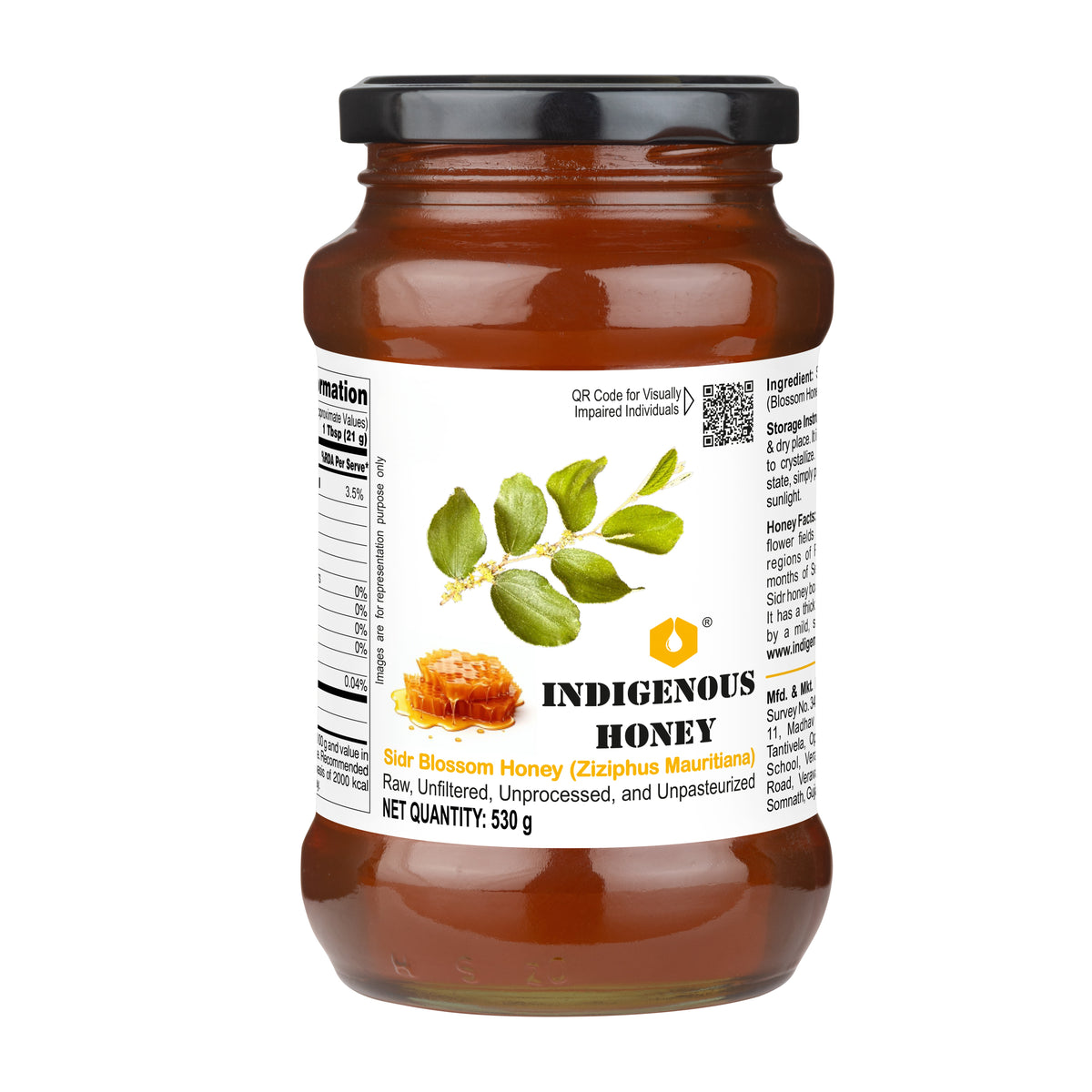
Honey's natural characteristics vary according to its floral source and geographical origin. At Indigenous Honey, our natural honey variants are also subject to applicable laboratory-testing and quality-control practices.
Our natural honey varieties, comb honey and honeycomb frame are tested at NDDB CALF, Anand, Gujarat for FSSAI honey parameters, antibiotic residues and heavy metals.
Advanced LC-HRMS and NMR claims apply only to the products and samples covered by the relevant reports.








Transparency Through Laboratory Reports
Don't Just Read Our Claims. Examine the Evidence.
We believe customers should be able to understand the science behind the honey they purchase. Where available, our laboratory reports provide information about the honey sample tested, the testing laboratory, the analytical methods used, the date of testing, the parameters examined and the reported laboratory findings.
Laboratory findings relate to the samples identified in their respective reports.
Our testing documentation may include:
LC-HRMS Reports
High-resolution analysis relevant to specified authenticity markers. Available from November 2026.
NMR Honey Profiling Reports
Chemical-profile analysis of applicable Certified Organic Raw Honey and spice-infused honey samples.
Quality Reports
Composition and quality-related analytical findings.
Residue Reports
Testing for selected antibiotics, heavy metals, and pesticides (pesticides: Certified Organic Raw Honey and the spice-infused honeys made with it).
Your Honey. Your Batch. Your Information.
Understanding the Testing Behind Your Honey
Every jar of Indigenous Honey carries a batch identification number. Our internal records help maintain product identification and traceability. Where corresponding information is available, customers can use their batch details to access relevant product and laboratory-testing information.
Reports will identify the samples they cover. Where testing was performed on a representative sample rather than the individual finished-product batch, that distinction will be clearly stated.
Step 1
Find the batch number printed on your jar.
Step 2
Send it to us through our lab report request page, or by WhatsApp or email.
Step 3
We send you the available testing information for your batch.
Request the lab report for your honey
Every batch of our Certified Organic Raw Honey, and of our spice-infused honeys, made with our Certified Organic Raw Honey, is NMR tested and tested for trace markers of rice syrup at Intertek, Germany, and is tested at NDDB CALF, Anand, Gujarat for FSSAI honey parameters, antibiotics, heavy metals and pesticide residues. From November 2026 these batches will also be LC-HRMS tested. Our Certified Organic Raw Honey and the spice-infused honeys made with it are certified organic under NPOP and USDA NOP by Ecocert. Our other natural honey varieties, comb honey and honeycomb frame are tested at NDDB CALF, Anand for FSSAI honey parameters, antibiotics and heavy metals.
Why reports are shared on request: under our agreement with the laboratory, a test report can be shared only with a customer who asks for it, for their own reference. That is why we do not publish reports on the website.
How it works: fill in the form with your name, WhatsApp number and the honey you bought. Add the batch number printed on your jar if you have it. Our team will send the report for your batch on WhatsApp. Thinking of buying? You can ask for a recent report too.
Frequently Asked Questions
Your Questions About Our Testing
What is LC-HRMS testing in honey?
LC-HRMS is an advanced analytical technique that combines liquid chromatography with high-resolution mass spectrometry.
It helps laboratories detect and characterise selected chemical compounds, including markers associated with certain forms of honey adulteration.
Is LC-HRMS more advanced than NMR?
Both are advanced scientific technologies, but they have different strengths.
LC-HRMS can provide highly sensitive analysis of selected chemical markers, while NMR provides broader chemical-profile information.
Using both methods can support a more comprehensive authenticity assessment.
Can LC-HRMS detect sugar-syrup adulteration?
Certain LC-HRMS methods can identify chemical markers associated with specific sugar syrups.
However, detection depends on the substances examined, method performance, and analytical interpretation.
No single method detects every possible form of honey adulteration.
Why does Indigenous Honey use multiple testing methods?
Different laboratory techniques examine different characteristics of honey.
Using complementary methods can provide more information about composition, authenticity, and selected food-safety parameters.
Is every Indigenous Honey product tested using LC-HRMS and NMR?
Testing varies according to the product and laboratory program.
Every batch of our Certified Organic Raw Honey, and of the spice-infused honeys made with it, is NMR tested. Our other natural honey varieties, comb honey and honeycomb frame are tested at NDDB CALF, Anand for FSSAI honey parameters, antibiotics and heavy metals. From November 2026, every batch of our Certified Organic Raw Honey, and of the spice-infused honeys made with it, will also be LC-HRMS tested.
The relevant reports establish which methods have been used for particular samples.
Can customers view the testing reports?
Relevant laboratory information can be provided through our laboratory-report section, subject to the availability of supporting reports and associated product or batch identification.

Our Commitment
Our journey with honey began long before laboratory reports became part of our website. It began with bees, flowers, beekeeping, and an appreciation for the natural processes through which honey is produced. That experience remains central to Indigenous Honey.
Today, we complement this foundation with modern analytical techniques, including NMR Honey Profiling and other laboratory methods, and, from November 2026, LC-HRMS. We believe responsible honey production requires both respect for nature and a commitment to scientific evaluation.
Testing does not replace good beekeeping practices. It strengthens the information available to evaluate the honey we offer.
Rooted in Beekeeping. Guided by Nature. Supported by Science.